
Understanding the Impact of 100 Supreme Court Cases Every American Should Know
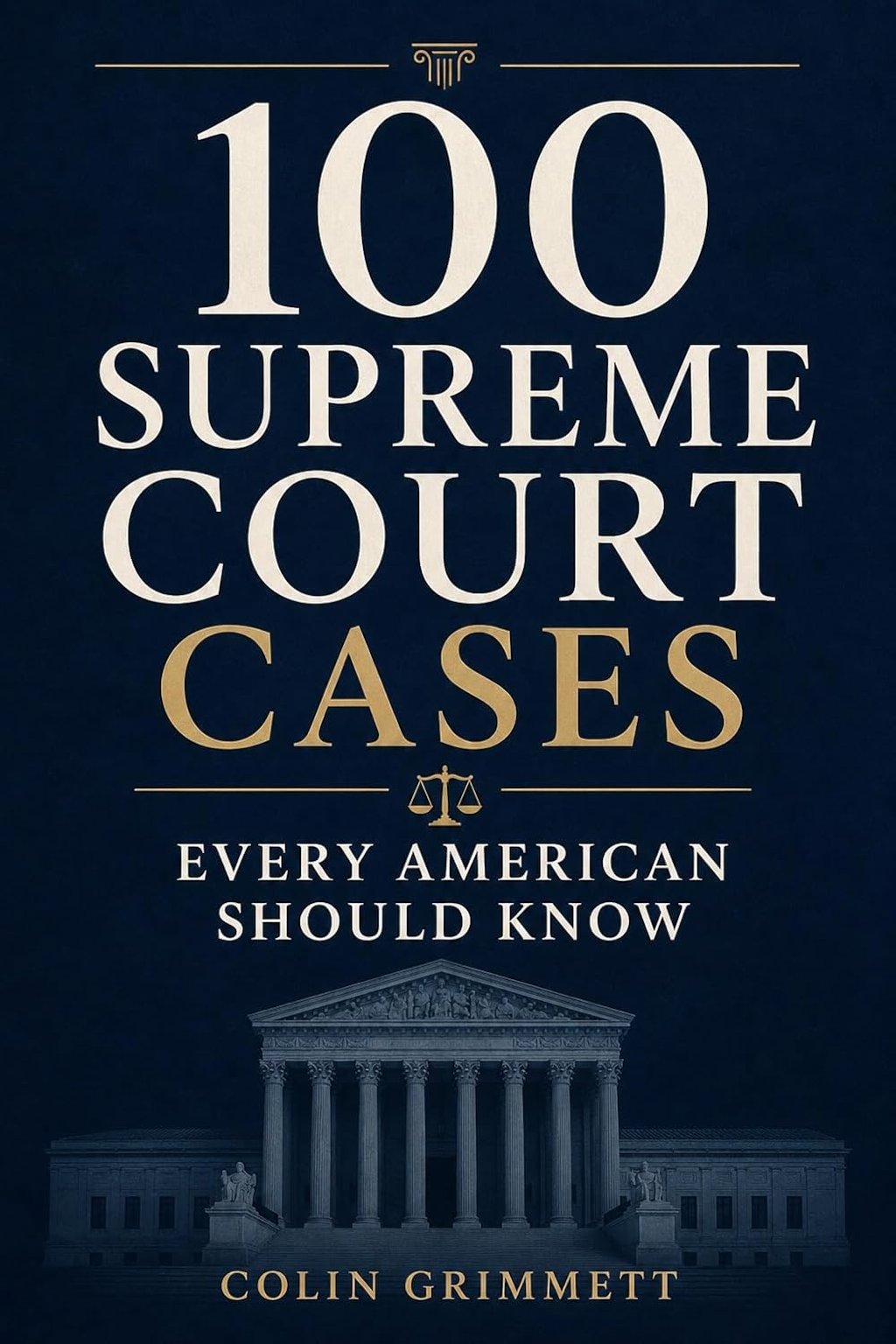
100 Supreme Court Cases Every American Should Know explains landmark rulings shaping constitutional law, civil rights, and federal power through clear case analysis and historical context.
Dexter S
5/5/20262 min read
Introduction to Constitutional Law
In the complex tapestry of American history, significant changes often transpire within the courtroom rather than on the battlefield. Colin Grimmett’s book, 100 Supreme Court Cases Every American Should Know: A Guide to Constitutional Law, serves as a profound exploration of how seminal legal decisions have shaped our society. Reflecting the legal tensions of various eras, each case discussed provides insight into the evolution of laws and the interpretation of the Constitution.
The Evolution of Legal Precedents
The Supreme Court has been at the helm of pivotal changes in American law, influencing critical social and economic issues. For instance, the Dred Scott decision highlighted the nation’s struggle with slavery, while Brown v. Board of Education marked a significant turning point in the civil rights movement. These landmark cases are not merely historical artifacts but are vital for understanding the ongoing dialogue regarding equality and justice in America. Grimmett’s narrative reveals how each decision interacts with broader social contexts, illustrating the intertwined nature of law and the evolution of societal norms.
Interpreting Constitutional Principles
A key strength of 100 Supreme Court Cases Every American Should Know lies in its focus on interpretation. Grimmett takes readers through how broad constitutional principles—such as liberty, equality, and justice—acquire meaning through their application in real-world scenarios. By discussing celebrated cases alongside controversial decisions, the book provides a nuanced perspective on the legal landscape, showing that our understanding of rights is continually contested and reshaped. This interpretive approach not only deepens historical understanding but also encourages readers to engage in the current debates surrounding these vital principles.
Lasting Impacts and Modern Governance
Each Supreme Court ruling has the potential to create waves of influence, impacting legislation, social behaviors, and public discourse for decades. For example, Roe v. Wade not only encapsulates the cultural and political conflicts of its time but continues to be a focal point in ongoing discussions about reproductive rights and governmental authority. Grimmett’s work emphasizes that these cases, whether viewed as milestones or failures, are urgent entries in the ongoing narrative of American democracy and constitutional evolution. The book draws attention to the importance of critical engagement with these historic decisions, encouraging readers to recognize their relevance amidst the constantly shifting landscape of law.
In summary, 100 Supreme Court Cases Every American Should Know offers a structured narrative that traces the historical development of legal thought through significant court rulings. By emphasizing interpretation and context, Grimmett provides a framework for understanding the dynamism of constitutional law and its impact on American society. This guide is invaluable not only for legal scholars but for any American seeking to grasp the legacy of our judicial system and its implications in contemporary discourse.
Contact
Questions? Reach out anytime, we're here.
© 2026. All rights reserved.